In an industrial project, mold construction is just one part of a broader process. First come component analysis and design; next come validation, ramp-up, production, and management of any changes that may occur over time.
That is why, at Meccanostampi, we approach every project as a partner, striving to maintain a comprehensive view of its entire lifecycle. Our goal is to integrate expertise, technologies, and processes to establish, from the very beginning, the conditions necessary for stable, repeatable, and efficient production.
The project begins before the mold is made
Early decisions can have a significant impact on subsequent stages.
The feasibility analysis makes it possible to evaluate the component, identify any potential issues, and compare design requirements with those of the production process. This phase draws on experience in mold design, knowledge of materials, molding expertise, and co-design activities with the customer.
Addressing these issues early on allows us to take action when changes are still easier to manage, thereby limiting the need for subsequent iterations and helping to ensure that the product can actually be scaled up for mass production.
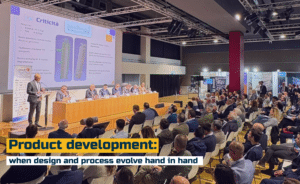
This is an approach we also explored in depth in the article on product development and the relationship between design and process.
From the First Test to a Stable Process
The completion of the mold marks the start of the fine-tuning and validation phase.
The initial functional test is followed by adjustment of the molding process and dimensional inspection of the samples. The results make it possible to assess the component’s compliance with the defined specifications and to identify any necessary adjustments to the mold or the process.
At Meccanostampi, this activity is supported by the Metrology Laboratory, using technologies such as tomography, touch-trigger or optical CMMs, and 3D optical scanning.
The goal is not merely to produce a component that meets specifications during testing, but to establish process conditions that ensure repeatability and production stability over time.
Planning means managing complexity
Once production begins, organizational considerations come into play alongside technical ones.
Resources, materials, orders, equipment, and priorities must be coordinated within a complex production system. For this reason, in recent years, Meccanostampi has introduced finite-capacity planning and scheduling tools in both mold manufacturing and stamping.
Having access to up-to-date data provides greater visibility into operations, allows you to simulate different scenarios, and enables you to manage changes and unforeseen events with greater insight.
Technology thus becomes a tool that supports skills and organization, with the goal of making the entire production process more reliable.
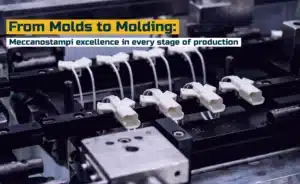
This is the same logic that underlies the design of industrial molds intended from the outset for mass production.
Molding and automation as parts of the same system
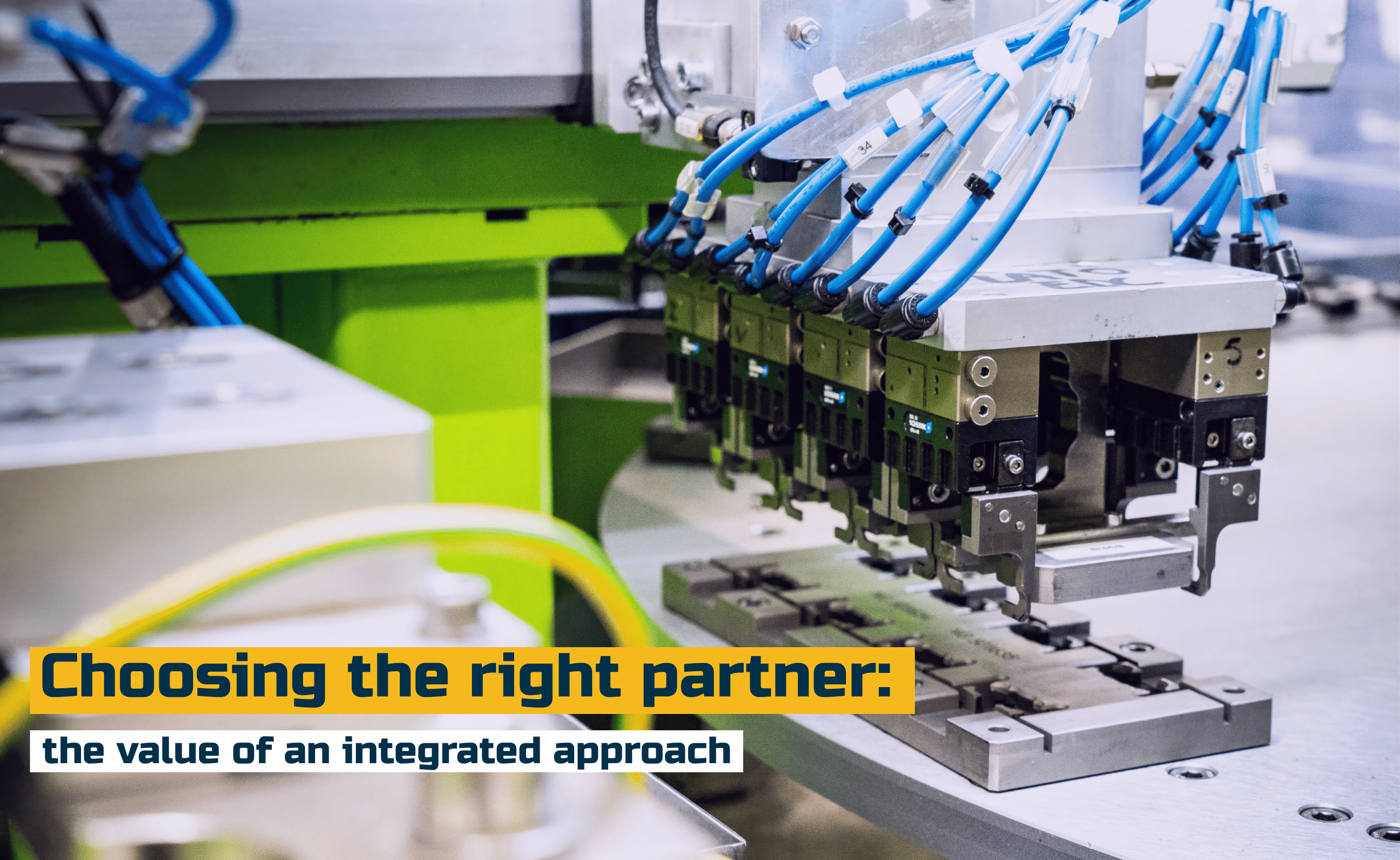
In projects involving high-volume production or specific manufacturing requirements, the operation of the mold must be considered in conjunction with that of the cell in which it will be installed.
Automation, material handling, control, and the organization of the various operations all contribute to the overall stability and efficiency of the process.
For this reason, the development process may involve not only the component and the mold, but also the methods by which the product will be manufactured, inspected, and handled during production.
The goal is to build a system that aligns with the project’s actual needs, while reducing activities that add no value, variability, and waste.
An industrial project continues to evolve
Materials, volumes, geometries, and production requirements may change over time.
Having a shared understanding of the product, the mold, and the process makes it possible to analyze the impact of these variations more quickly and identify the necessary actions while maintaining a big-picture perspective.
This is where the value of an integrated approach becomes clear: design, mold construction, validation, molding, inspection, and industrialization are not viewed as separate activities, but as parts of the same process.
At Meccanostampi, we follow this approach to guide a project from the initial analysis through mass production and its subsequent developments.
Because the robustness of a project depends not only on how it is conceived, but also on the process’s ability to continue functioning, adapt, and maintain the required performance over time.